
Most packaging equipment purchases follow the same pattern: someone identifies a problem, searches for a solution, compares specifications, and orders. With a gummed tape dispenser, that pattern breaks down more often than with other equipment, because the machine interacts with the tape in ways specifications do not fully describe. The result is dispensers that arrive with the wrong tape width, sit unused beside a station that never needed them, or jam within a month because nobody knew the brush required rinsing.
The following observations come from the questions buyers most frequently raise when specifying water-activated tape equipment, along with the practical details that tend to get overlooked.
The Volume Estimate Is Usually Wrong
Buyers tend to estimate carton volume using a weekly average divided by five. This misses two things: peak days and the distribution of carton sizes. An operation shipping a steady 200 cartons daily is a different case from one shipping 100 cartons four days a week and 600 on Monday. The manual gummed tape dispenser handles the steady case comfortably; the spike case produces a queue on the busy day regardless of how the average looks on paper.
A more reliable estimate counts cartons per shift during the busiest shift of the week. If that number exceeds roughly a few hundred and the sealing is repetitive, a bench dispenser with preset lengths becomes the practical choice rather than a handheld unit.
Tape Width Is Confirmed After the Order, Not Before
This is the most avoidable error and the most common. Water-activated kraft tape is sold in several widths, and a dispenser designed for one width will not reliably feed another. Buyers who already hold tape inventory should measure the roll width and confirm the supported range before ordering equipment. Those who are sourcing tape and dispenser together have more flexibility but should still fix the tape specification first, since the tape determines the dispenser, not the reverse.
Roll diameter matters for the same reason. A large-diameter roll that does not fit the dispenser’s holder either goes unused or forces a return.
The Water System Gets Ignored Until It Fails
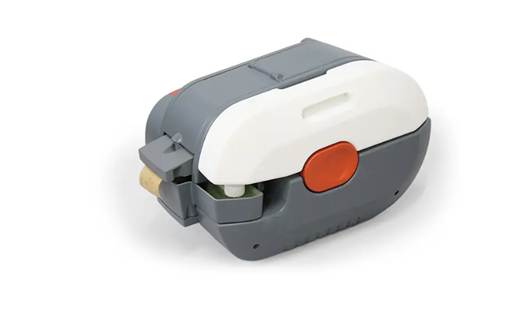
Every water-activated dispenser moistens tape, but the mechanism varies, and the maintenance burden varies with it. On a manual handheld unit like the GHC-50, the reservoir is small and the brush sits close to the tape path — straightforward, but it requires regular rinsing because adhesive residue accumulates. On a bench automatic model such as the NT-AT 3.0, the 1-liter container and heated water reduce the time needed for adhesive activation, which helps at higher throughput.
What buyers overlook is that moistening consistency, not water capacity, governs seal quality. A dispenser that wets one edge more heavily than the other will produce corner lift-offs regardless of how much water it holds. Operators should test a new unit with a dozen cartons and inspect the dried seals before committing to volume production.
Function Selection Drifts Toward Overbuying
Automatic and sensor-operated dispensers offer real benefits: preset tape lengths reduce waste, and hands-free dispensing, as on the Tape-AT model, keeps both hands available for carton positioning. But a lower-volume operation with inconsistent carton sizes may find that a manual lever unit like the NT-800 delivers the standardization it needs at lower cost and with fewer components to maintain.
The useful question is not which dispenser is most advanced, but which functions the workflow actually uses. A sensor trigger helps a packer holding a carton steady; it adds little where cartons sit flat on a bench during sealing.
The Detector Accessory Is Underused
One accessory that solves a genuine daily problem is the tape length detector, which measures a carton and calculates the required tape length automatically. Manual estimation produces two failure modes: tape cut too short, requiring a second piece, and tape cut too long, wasting material on every carton. Neither shows up dramatically in a cost report, but both accumulate across thousands of cartons. Buyers specifying equipment for repetitive sealing should at least evaluate whether the detector fits their carton size range.
Supplier Support Is a Specification Item
For distributors and resellers, the dispenser is only part of the purchase. Spare parts availability, warranty terms, and whether the supplier offers OEM/ODM customization — logo, body color, selected functions — determine whether the product line can be sustained after the first order. Sourcing dispensers and compatible kraft tape from the same supplier, as Air Power Pak supports, simplifies matching and replenishment, but buyers should confirm tape specifications and minimum order quantities before committing to bulk volumes.
Maintenance Assumptions That Cause Trouble
Three habits prevent most dispenser failures. Rinse the moistening brush weekly to clear adhesive and dust; a clogged brush causes the dry patches that lead to seal failure. Empty the reservoir before extended idle periods to prevent stagnant water and odor. Clear paper scraps from the blade area, since accumulated fragments misalign cuts.
Operators should also learn the correct pull rhythm on manual units. A steady draw gives the brush time to transfer moisture; a fast, jerky pull leaves dry sections that never bond properly.
A Final Consideration
The gummed tape dispenser decision is ultimately a matching exercise between carton volume, tape specification, and operating style. Air Power Pak’s range — from the portable GHC-50 through the NT-800, NT-AT 3.0, and sensor-operated Tape-AT — covers manual through hands-free workflows, which means most operations can find a fit. The buyers who end up satisfied are the ones who confirmed tape width, counted cartons on their busiest shift, and tested seal quality on real cartons before scaling up.